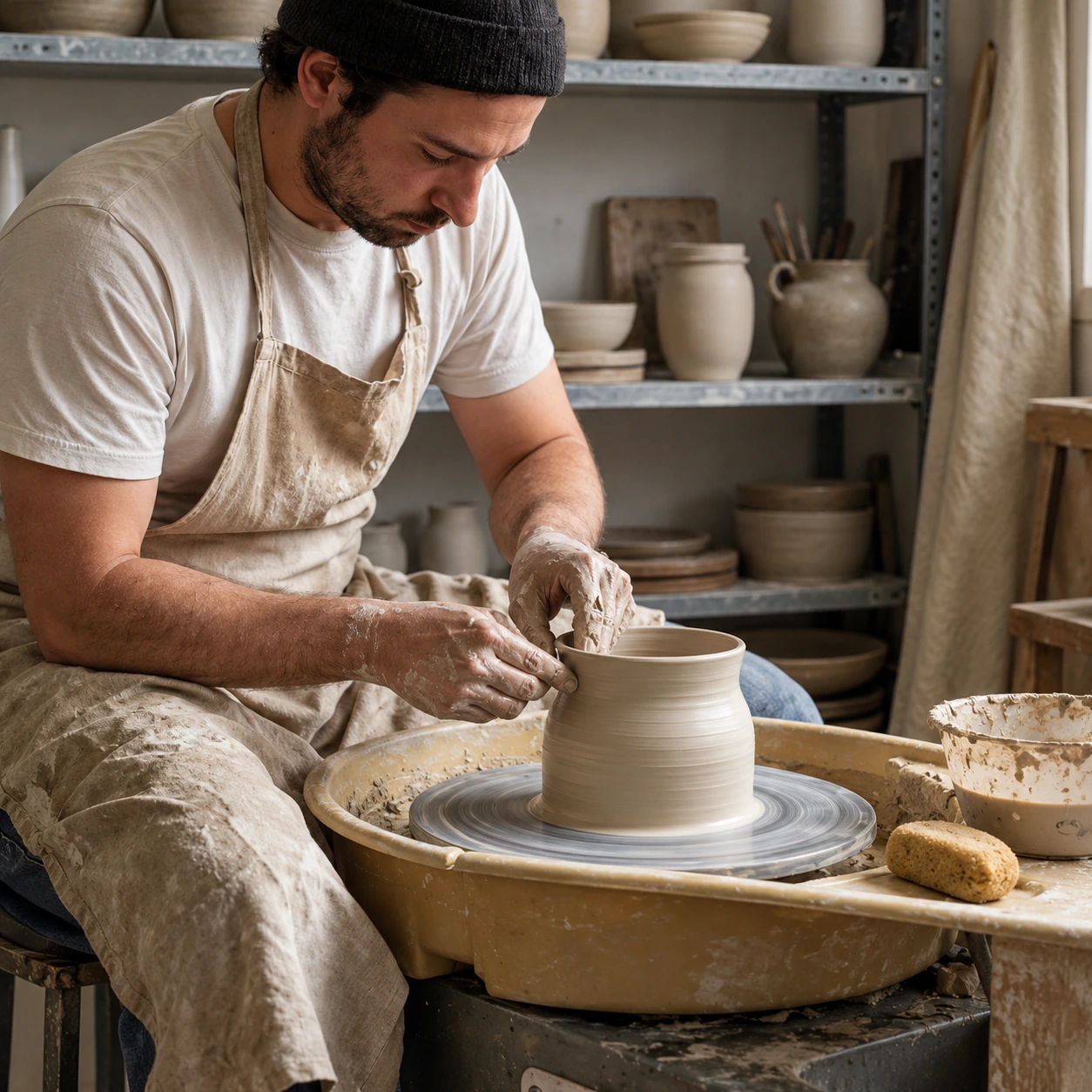
It begins with a simple form
A cup can look uncomplicated, yet its shape holds a series of small decisions: the curve of the wall, the weight of the base and the way a rim meets your hand. Looking closely at these details is part of the pleasure of handmade pottery.
At the wheel, a lump of clay is centred before its walls are opened and drawn upwards. The form gradually takes shape as the potter balances pressure, movement and water.
Time between each stage
The wheel is only one part of the process. A piece is left to firm up before its base is trimmed; handles and other details can then be added while the clay is still workable. Drying cannot simply be rushed without changing how a piece behaves.
Firing and glazing bring another set of choices. A glaze can emphasise a curve, settle into an impression or leave part of the clay exposed. Small variations give a collection a shared language without making every piece identical.
Made to become familiar
A handmade object becomes most interesting when it is used. The cup you reach for each morning or the bowl you put on the table becomes familiar through touch, weight and repetition. That everyday relationship is what makes a simple form worth considering.